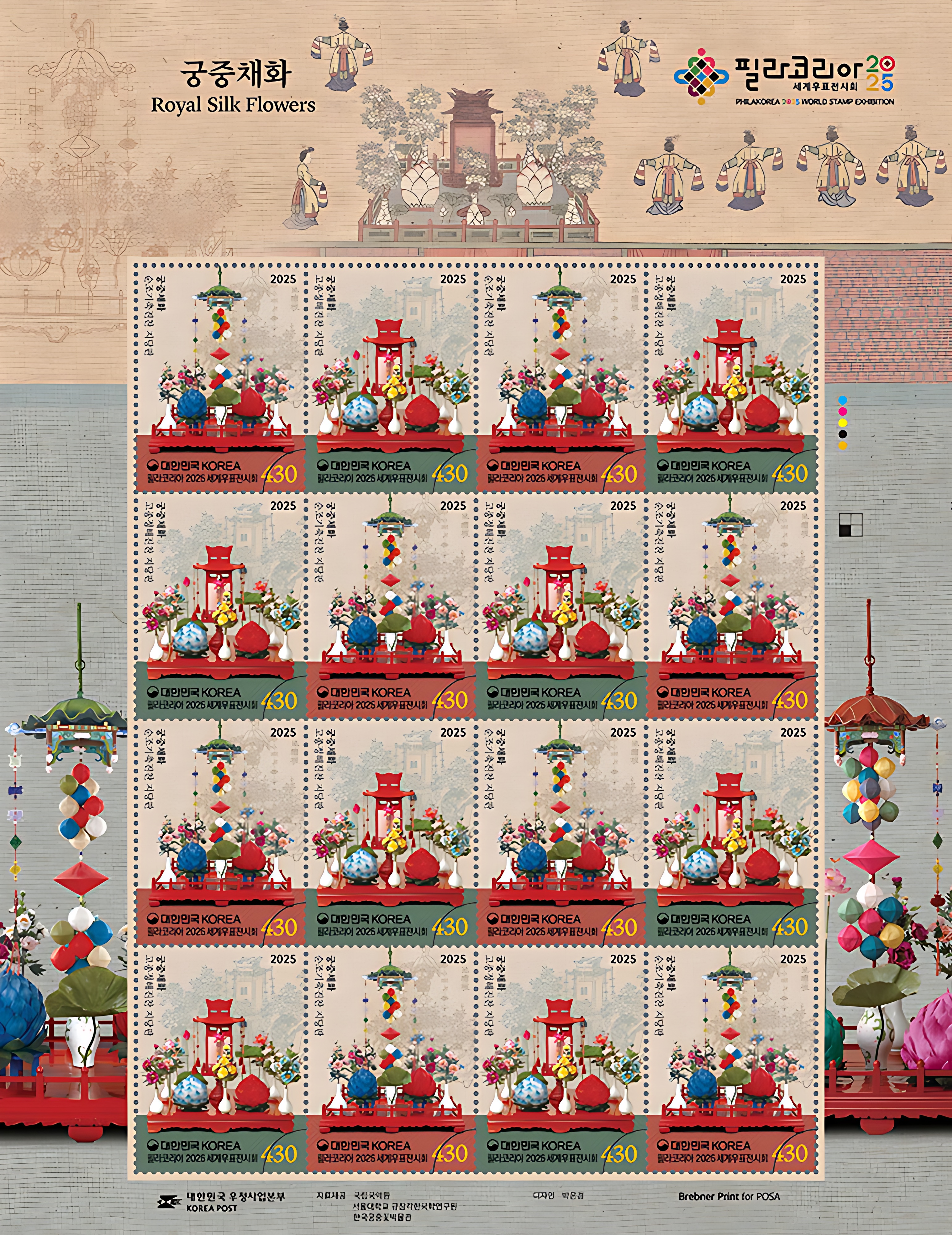
Product Description: Gung (宮) – Royal Wreath of the Joseon Dynasty Gung (宮) is an exquisitely handcrafted wreath once used to decorate grand royal banquets and ceremonies during the Joseon Dynasty. These elaborate floral arrangements symbolized prestige, beauty, and prosperity, playing an essential role in elevating the atmosphere of palace celebrations. Historical Significance During Joseon’s royal festivities, wreaths crafted with luxurious royal makeup adorned banquets of every scale. However, their prominence faded during the Japanese colonial era. Fortunately, this tradition has been revived by Master Hwang Su-ro, National Intangible Cultural Heritage No. 124, who meticulously restored the craft using ancient royal documents. The production method of these ceremonial court paintings is carefully recorded in the royal protocols of the Joseon Dynasty, including: Jinyeon Uigwe of Emperor Sunjong Imjinyeon Uigwe of Emperor Gojong Both are preserved as UNESCO World Heritage sites. Exquisite Craftsmanship The creation of Gung is a highly detailed process requiring remarkable skill: Fine silk or ramie fabric is naturally dyed. Each petal is hand-cut, shaped, and ironed. Flowers are meticulously hand-painted with pine blossoms and finished with beeswax for a lasting shine. These floral panels, known as Jeongpan (池塘板), decorated the royal banquet halls, embodying elegance and grandeur. The Jidangpan: A Royal Flower Stage Beyond decoration, Gung played a key role in Jeongjae (才) performances—the traditional royal dances. The Jidangpan (才), a stage designed as a lotus pond, became the centerpiece of dances such as: Gainjeonmokdanmu (Picking Peony Dance) Cheoyongmu (Dance of Exorcism) Jangsaengboyeonjimu (Dance of Longevity and Prosperity) At the Najinyeon (進宴) banquet, dancers gracefully performed around the Jidangpan, creating a breathtaking spectacle of movement and color. Sunjo & Gojong Era Jidangpan Two particularly remarkable examples are highlighted through historical restoration: Sunjo Era Chukjinchan Jidangpan Inspired by the Sunjo Chukjin Uigwe Features a lotus leaf-shaped roof with tassels Seven treasure lanterns illuminate the stage Dancers and shamans perform mystical lotus dances Gojong Era Jeongjinchan Jidangpan Inspired by the Gojong Injinyeon Uigwe More ornate and magnificent than Sunjo’s version Tassels hang from all four roof corners Decorated with striking red-and-blue lotus flowers Adorned with Manhwawang woodblock prints A Symbol of Royal Aesthetics More than simple decoration, Gung represents the Joseon royal family’s pursuit of auspiciousness, beauty, and good fortune. Each piece embodies centuries of artistry, philosophy, and cultural identity. Preserving these palace paintings is vital to honoring their legacy—artworks that have celebrated eternity through unchanging beauty. ✅ Perfect for collectors, cultural exhibitions, and heritage enthusiasts, Gung (宮) is not just an artifact, but a living testament to the artistic mastery of the Joseon Dynasty.